Cellular iPad Mini Doesn’t Feature mmWave 5G Support, Unlike iPad Pro
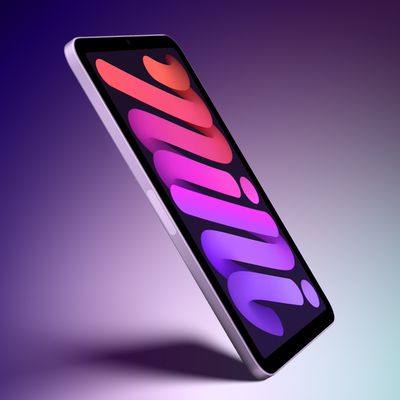
Apple this week debuted the sixth-generation iPad mini, cellular models of which can connect to 5G for the first time. However, it's worth noting that cellular connectivity on the new iPad mini does not extend to support for faster mmWave 5G.
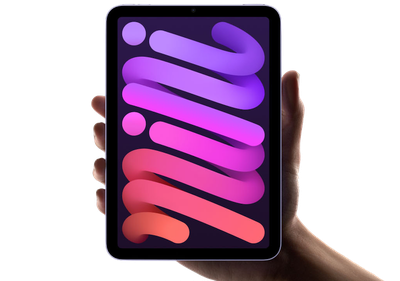
Apple doesn't maintain a cellular compatibility page for iPad models like it does for its iPhones, so the lack of mmWave 5G support on the iPad mini could surprise some Apple customers. Currently, Apple's mmWave 5G support is limited to the iPhone 13 lineup, iPhone 12 lineup, and the cellular variants of the 11-inch and 12.9-inch iPad Pro.
On the plus side, like the new iPhone 13 models, the iPad mini does support more 5G bands overall than iPhone 12 and cellular iPad Pro models, according to Apple, so the iPad mini does have greater 5G coverage around the world than the iPhone 12 and iPad Pro.
Despite rumors suggesting iPhone 13 models would support mmWave 5G in additional countries, support for mmWave remains limited to iPhone and iPad models sold in the United States, so its absence in the new cellular iPad mini is only likely to concern customers who are based there.
mmWave is a set of 5G frequencies that promise ultra-fast speeds at short distances, making it best suited for dense urban areas. By comparison, sub-6GHz 5G is generally slower than mmWave, but the signals travel further, better serving suburban and rural areas. All four iPhone 13 models support sub-6GHz outside of the United States, and sub-6GHz networks are more common in countries that have rolled out 5G.
Starting at $499 for the 64GB Wi-Fi-only model, the redesigned sixth-generation iPad mini is available to pre-order now on Apple's online store. Cellular models are available for $150 more over the base price of each configuration. iPad mini shipping begins Friday, September 24.
Popular Stories
Apple today confirmed to Reuters that it has acquired Q.ai, an Israeli startup that is working on artificial intelligence technology for audio.
Apple paid close to $2 billion for Q.ai, according to sources cited by the Financial Times. That would make this Apple's second-biggest acquisition ever, after it paid $3 billion for the popular headphone and audio brand Beats in 2014.

Q.ai has...

Apple recently updated its online store with a new ordering process for Macs, including the MacBook Air, MacBook Pro, iMac, Mac mini, Mac Studio, and Mac Pro.
There used to be a handful of standard configurations available for each Mac, but now you must configure a Mac entirely from scratch on a feature-by-feature basis. In other words, ordering a new Mac now works much like ordering an...
A newly surfaced resale operation is seemingly offering Apple Store–exclusive display accessories to the public for the first time, potentially giving consumers access to Apple-designed hardware that the company has historically kept confined to its retail environments.
Apple designs a range of premium MagSafe charging stands, display trays, and hardware systems exclusively for displays in ...
Last year, Apple launched CarPlay Ultra, the long-awaited next-generation version of its CarPlay software system for vehicles. Nearly nine months later, CarPlay Ultra is still limited to Aston Martin's latest luxury vehicles, but that should change fairly soon.
In May 2025, Apple said many other vehicle brands planned to offer CarPlay Ultra, including Hyundai, Kia, and Genesis. At the time,...
Update: Apple Creator Studio is now available.
Apple Creator Studio launches this Wednesday, January 28. The all-in-one subscription provides access to the Final Cut Pro, Logic Pro, Pixelmator Pro, Motion, Compressor, and MainStage apps, with U.S. pricing set at $12.99 per month or $129 per year.
A subscription to Apple Creator Studio also unlocks "intelligent features" and "premium...