NY Times reports on Intel's extensive testing of the Core i7 (Nehalem) processors which officially launched today. The company has invested over $500 million annually to test these chips in an effort to avoid any show-stopping bugs.
This cautious attitude comes from experience for Intel who recalled their Pentium chips in 1994 after a widely publicized bug in its floating point calculation unit.
After the Pentium flaw, Intel also fundamentally rethought the way it designed its processors, trying to increase the chance that its chips would be error-free even before testing. During the late 1990s it turned to a group of mathematical theoreticians in the computer science field who had developed advanced techniques for evaluating hardware and software, known as formal methods.
Even with such testing, Intel says it would be impossible to evaluate every possible scenario. As an additional safety net, Intel has included software in the Nehalem chips which can be changed after they ship.
Apple is expected to eventually adopt versions of Intel's Core i7 in future Macs.
Sunday September 13, 2026 3:00 am PDT by Eric Slivka
Update 10:04 a.m.: iOS 27 is rolling out now, though it may take a bit for all users to see it, so keep checking!
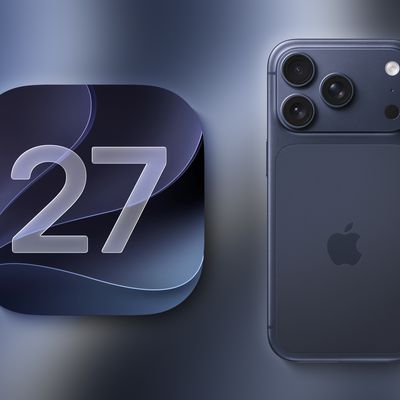
Apple is about to release iOS 27, which will finally deliver more advanced Siri AI capabilities as well as a variety of other refinements, improvements, and new features to iPhones. It's Apple's biggest software update of the year, and Apple announced at Wednesday's iPhone event...
Monday September 14, 2026 9:00 am PDT by Joe Rossignol
Update — 10 a.m. Pacific Time: Apple has released iOS 27.
During its iPhone 18 Pro and iPhone Duo event last week, Apple announced that iOS 27 will be released widely on Monday, September 14.
iOS 27 should be available around 10 a.m. Pacific Time / 1 p.m. Eastern Time today via the Settings app, under General → Software Update.
Below, we have highlighted eight new features and...
Tuesday September 15, 2026 1:43 am PDT by Tim Hardwick
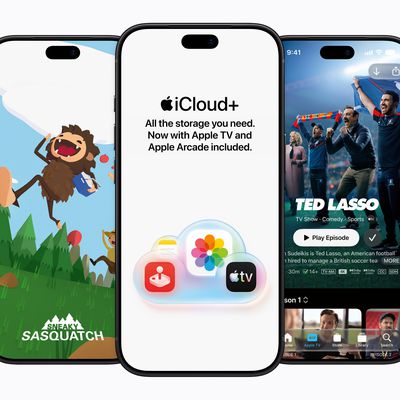
Apple today announced a new subscription initiative that turns paid iCloud+ subscriptions into a broader services bundle in more than 100 countries.
In select countries, Apple says every paid iCloud+ plan, including the cheapest 50GB tier, now includes Apple TV and Apple Arcade "at no additional cost," while family sharing extends the storage, TV and Arcade access to up to five people....