

NuraLogix this week unveiled the Anura MagicMirror, a new health product that is designed to use a combination of sensors and artificial intelligence to check vital signs and provide disease risk assessments.
The 21.5-inch tabletop smart mirror takes a 30 second scan when a person sits in front of it, analyzing facial blood flow to provide a wealth of information. It uses a patented Transdermal Optical Imaging technology to detect a person's face and monitor blood flow. Machine learning algorithms use the data to provide information on more than 100 health parameters.
NuraLogix says that the MagicMirror can provide health information that includes blood pressure, BMI, heart rate variability, pulse rate, breathing rate, and facial skin age. It can provide risk assessments for diabetes, cardiovascular disease, stroke, hypertension, fatty liver disease, and more, plus it offers assessments of mental stress and depression risk.
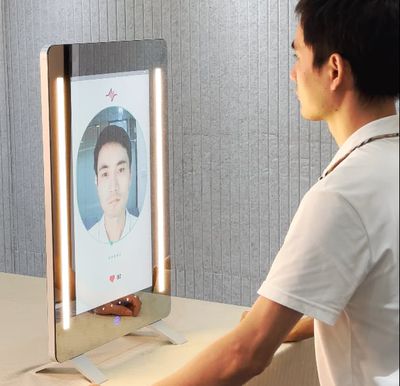
More information on the MagicMirror can be found on the NuraLogix website. The company has not provided a launch date or a price, but the device appears to be aimed at clinic waiting rooms, retirement homes, and other health-related facilities.














Top Rated Comments
Mirror: "Not you, sorry."
The Apple Watch resting heartrate monitoring is a simple example of one such thing that does work, and is valuable--in my case, after starting a medication, I could see my resting rate go up by 15 BPM over a period of time, which in turn explained some annoying things I'd been experiencing. Stopped the drug, and could see a clear graph of my heart rate going down to a healthy level over a period of a few weeks, all without doing anything but wearing a watch regularly that I would have done anyway.
I predict that none of them will end up as ewaste, because none of them will actually ship.
This is enough for me not to be interested in this contraption.
It is a tool for those that are anxious about their health to throw more money at.
Diagnostic tools are best used when looking for a targeted outcome. The development of diagnostic technology follows the pattern of needing an outcome, and developing a tool for it.
Here, we have a technology being developed for the sake of diagnosing... well, nothing. The technology has no baseline outcome to work towards and no requirement to provide the user with strictly usable information. Worse, while it ostensibly provides possibly a prompt for a patient to see a doctor, it in fact potentially could cause someone not to, and in turn miss both valuable advice and proper diagnosis. The's nothing in this that a correct set of measurements and a blood test taken by your GP (MD or whatever you have in your country) can offer - and with more privacy to boot.