You Can Use the iOS 16 Fitness App for Activity Tracking Without an Apple Watch
The Fitness app on the iPhone has long been available as an activity tracking tool for those who own an Apple Watch, but in iOS 16, Apple wants to make the app an activity tracking option useful even for those who don't own an Apple Watch.
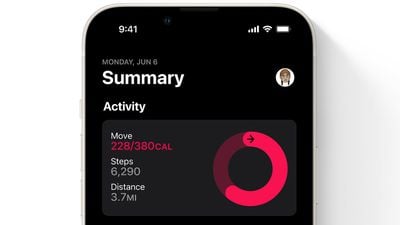
With iOS 16, you can track your activity using the iPhone motion sensors. The iPhone can keep tabs on steps, distance, and third-party workouts, giving you an estimate of your calories burned.
You can set a daily move goal even if you don't have an Apple Watch, using the iPhone to track your progress toward reaching the goal. The updated Fitness app is useful for people who don't have an Apple Watch or another kind of activity tracker and who would like to be more active.
The Fitness app looks almost identical to the Fitness app available to Apple Watch owners, but it does not include a Fitness+ tab as that feature is restricted to the Apple Watch, nor does it have Stand and Exercise rings.
For more on what's new in iOS 16, make sure to check out our hands-on video.
Popular Stories
The Apple launches keep coming! The company is set to release two new products on Friday, November 13: the all-new Apple HomeView and the fourth-generation Apple TV 4K, both of which have been available to pre-order since mid-October.
Apple HomeView: Apple's new smart home display, powered by Apple Intelligence with Siri AI, for entertainment and managing the home. Available in tabletop and...
Apple has announced that the long-running Apple Support Community discussion forums for user-to-user tech support will be permanently closing on Friday, November 20. The forums have existed in some form for nearly 30 years, so it is the end of an era.
Effectively immediately, the Apple Support Community forums are in a read-only state, with new posts no longer being accepted. The final...
Apple has made a change to its development process for iOS 28, macOS 28, and corresponding software updates, according to Bloomberg's Mark Gurman.
In his Power On newsletter today, he said Apple separates development of each year's new operating systems into three major stages. Typically, he said each stage consists of four weeks of coding followed by a four-week "convergence" period where...