Intel's Silverthorne Ultra-Mobile Processor Now Called 'Atom'
Intel announced today that they are officially branding their upcoming ultra-mobile processor family as 'Atom'. Formerly known as Silverthorne, the new family of low-power processors are specifically designed for mobile internet devices (MIDs).
"This is our smallest processor built with the world's smallest transistors," said Intel Executive Vice President and Chief Sales and Marketing Officer Sean Maloney. "This small wonder is a fundamental new shift in design, small yet powerful enough to enable a big Internet experience on these new devices. We believe it will unleash new innovation across the industry."
'Atom' offers very low-power consumption (0.6-2.5 watt) over Intel's laptop-class processors (35 watt) yet preserves the Core 2 Duo instruction set. In theory, this means that Mac software could run unmodified on the new low-power processors. Intel envisions the use of these processors to introduce a new class of internet capable devices.
Rumors have placed 'Atom' processors in upcoming mobile devices from Apple -- either the rumored Apple tablet/PDA or the next generation iPhone.
Popular Stories
Apple today announced the "HomeView," an all-new kind of smart home hub featuring a 7-inch Liquid Retina display and Siri AI.
Apple's senior vice president of Worldwide Marketing Greg Joswiak said:
Apple HomeView is designed to be shared by everyone in the home yet feel completely personal to each user. It recognizes your face to shift from a household screen to your own experience,...
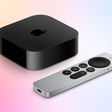
Apple today announced the fourth-generation Apple TV 4K, with key features including an A19 chip, Siri AI support, an updated Siri Remote that has Find My support with Precision Finding, built in far-field microphones, support for surround sound with four HomePods in front and rear pairs, and more.
The A19 chip in the new Apple TV 4K delivers up to 50% faster CPU performance and up to twice...
MacRumors was first to reveal the name "HomeView" last week, after discovering a trademark filing from a secretive shell company that we correctly suspected was linked to Apple.
Apple was likely behind a "homeOS" trademark filing as well, but the company ultimately decided to stick with generic "HomeView software" naming, just like it refers to the HomePod's operating system as "HomePod...