Xiaomi Announces Custom Chip to Rival Apple Silicon
Chinese Apple competitor Xiaomi today announced the "Xring O1," a custom 3nm chip designed to rival Apple silicon (via Bloomberg).

The company plans to switch its devices to custom silicon chips, just like Apple. The Xring O1 chip will be included in three devices to begin with, including the Xiaomi Tablet 7 Ultra–a newly announced 14-inch tablet.
Like the latest-generation Apple silicon chips, the Xring O1 is made with a 3nm fabrication process. The company explicitly said that it asked itself:
We also want to become one of the top chipmakers, with our phones targeting iPhones, can our chips also be compared against those of Apple's?
The Xring O1 will lag behind Apple's latest chips in some respects, such as processor clock speed, but the company still stressed its design achievement.
At a special event to announce the chip and tablet in Beijing, Xiaomi CEO Lei Jun said that the company plans to invest 200 billion yuan ($27.8 billion) in research and development over the next five years. At least $7 billion will be invested in developing and enhancing its own chip technology over the next decade.
Popular Stories
Sales of iPhone 18 Pro models in China were 12% higher in the three days after launching than sales of iPhone 17 Pro models were during their entire first week last year, according to Counterpoint Research.
The strong start helped Apple claim the top spot in the country's smartphone market for the week of September 14 to 20, handing it a 33% share. But the news could get even better for...
Tim Cook is visiting China for the third time this year, with talks in Guangdong focused on expanding Apple's manufacturing and sales operations, the South China Morning Post reports.
This is Cook's first China trip in his capacity as Apple's executive chairman. He moved into the position on September 1 when John Ternus took over as CEO. Apple has said part of Cook's work involves...
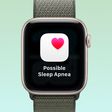
Apple today launched sleep apnea notifications in mainland China, following approval from the country's National Medical Products Administration. The feature is supported on the Apple Watch Series 9, Ultra 2, SE 3, and newer.
The Apple Watch uses its accelerometer to monitor breathing disturbances during sleep, analyzing the data every 30 days for signs of moderate to severe sleep apnea. Users ...